


Irtiza Haider
Founder & CEOHealthcare Systems Architecture & Product Strategy
Product strategy, healthcare systems architecture, HMIS platforms, and clinical go-to-market across multi-department hospital environments.
Helixis AI was founded on a simple conviction: artificial intelligence cannot improve healthcare by reading disconnected fragments. Reliable clinical intelligence requires an uncompromising foundation of patient context, evidence provenance, and physician governance.
Our leadership structure reflects the systems we build: product strategy, distributed systems engineering, and frontline medical practice challenge one another early so every feature respects real clinical constraints.
Healthcare Systems Architecture & Product Strategy
Product strategy, healthcare systems architecture, HMIS platforms, and clinical go-to-market across multi-department hospital environments.

Distributed Data Engineering & Clinical AI Pipelines
Data engineering, event-sourced backend systems, automated HL7/FHIR pipelines, and deterministic clinical AI/ML data workflows.
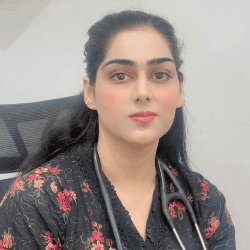
Clinical Workflow Design & Medical Governance
Clinical workflow design, hospital operations, epistemic safety validation, and frontline physician usability across outpatient and inpatient care.
The difficult part is deciding what happens when two departments disagree, a ward workstation goes offline, a clinician retries the same order, an HL7 interface fails halfway through, or an auditor asks why a critical medical or financial record changed.
Helixis AI powers both Helixis Clinical Intelligence (our non-disruptive FHIR sidecar) and the Helixis Health Platform (our 9-subsystem hospital operating system) to unify longitudinal patient context, diagnostic laboratories, hospital pharmacies, inpatient beds, and continuous revenue integrity.
Start with clinical workflow, medical authority boundaries, and failure modes before selecting implementation patterns.
Treat critical patient and financial data as evidence: attributable, recoverable, and impossible to silently overwrite.
Keep every product and AI claim strictly proportional to deployment and peer-reviewable validation evidence.
Prefer deterministic systems that clinicians and hospital operators can inspect during exceptions—not only on the happy path.
We map the real hospital workflow, including exceptions, partial specimen completion, authority boundaries, and offline recovery paths.
Important clinical and financial facts drive downstream read models and integrations without losing the immutable history of change.
Sensitive clinical commands and signatures are validated where medical license authority can actually be enforced—never only in the browser.
Product decisions, technical architecture, and bedside medical reality challenge one another in the same room from day one.
We build decision support, never autonomous medical authority. A licensed human clinician retains legal and ethical responsibility for every patient care decision.
No clinical statement should exist without inspectable provenance. Every generated draft maps to timestamped, verified source observations.
Hospitals cannot pause care when networks fluctuate. Our systems are engineered for deterministic stability, edge caching, and graceful degradation.
Hospital data belongs exclusively to the hospital. Strict tenant boundaries prevent co-mingling, and patient data is never used to train public commercial models.
We support open healthcare standards (HL7 v2, FHIR R4, LOINC, SNOMED) rather than building proprietary walled gardens that trap hospital records.
We reject marketing exaggeration, unverified accuracy metrics, and premature regulatory assertions in favor of transparent, peer-reviewable clinical engineering.
Explore a guided, interactive Helixis AI demonstration using synthetic patient information. Test the longitudinal Patient 360 workspace, trace citations, and physician sign-off gates firsthand.